Commercial painting for Melbourne businesses
Warehouses, factories, offices, shops, schools and community buildings. Worked in zones, after hours or right through the night, so your doors open in the morning and your people keep working. Insured for twenty million dollars, licensed for scissor lift and boom lift.
What gets asked first on a commercial site
Nobody running a building opens with a question about colour. The first six questions are always the same, so here they are with the answers.
- Can you actually get on site?Current work permit card and safety card, insurance certificate sent through to your office beforehand, and sign in and sign out every day the way a managed site expects it. Induction becomes a formality rather than a delay.
- Will you stop our operation?The job is split into zones so one area is being painted while the rest keeps running. Where that will not work, we move to nights or weekends and you lose nothing.
- Can you work at height?Licensed for both scissor lift and boom lift. Two storey facades, high walls, atriums and warehouse bays are reached from a lift, not staged off the floor.
- Who carries the risk?Public liability with AAMI, twenty million dollars of cover, against a registered ABN. The certificate goes over before anyone turns up.
- Will the price move?One fixed number, worked out in a day or two after we have walked the site. If something genuinely unforeseen turns up, you hear about it before the work happens, not on the invoice.
- What are we left with?A seven year warranty on our workmanship, the leftover tins with brand, colour code and batch number, so a touch up in two years matches what is already on the wall.
Access, insurance and hours
On a commercial site the first question is never about colour. It is whether the painter can get through the gate, work at height, and finish without stopping your operation.
Sites we take on: warehouses, factories and workshops, offices, shops and retail, service stations, schools and childcare, community and heritage buildings, hotels and hospitality. The tickets, insurance and after hours access are the same whichever it is.
$20,000,000 public liability
Insured with AAMI. Send through the address it needs to go to and the certificate comes back with the quote, so it is filed before anyone asks for it.
Work permit and safety cards
Current documentation for site entry, so induction is a formality rather than a delay.
Scissor lift and boom lift
Licensed for both machines. Which one comes depends on the reach and what is underneath: a scissor lift where the work is straight up off a clear floor, a boom lift where the wall sits back behind planting, racking or parked stock.
Sign in, sign out, every day
Attendance recorded at both ends of the shift, the way a managed site expects it.
Nights and after hours
A bottle shop ceiling sprayed out between close and open, trading as normal the next morning. Same approach for offices, shops and warehouses.
Staged around your operation
Which part of the building is closed off, and when, is agreed before we start rather than worked out on the day.
Painting around your opening hours
A commercial repaint is priced on square metres and won or lost on downtime. Most of the planning goes into when we are on site rather than what goes on the wall.
- OvernightThe open ceiling of a bottle shop in Ballarat, services and all, was sprayed out black between close and open. Staff walked in the next morning to a finished ceiling and the shop traded as usual.
- Zone by zoneFloor by floor, wing by wing, or bay by bay. Each section is sheeted up, finished and handed back before the next one is touched, so the building never loses more than a corner of itself at a time.
- Weekends and shutdownsQuiet periods, long weekends and planned shutdowns are the cheapest time to paint a working building, because nothing has to be worked around.
- Early starts through summerOutside work in heat around thirty five degrees runs from six until ten in the morning. After that paint dries too fast on a hot wall and the finish suffers for it, so we stop rather than push on.
- Handed back clean each timeTools washed, sheeting lifted, the area put back at the end of every shift. A site that is being painted overnight has to look untouched by opening.
Warehouses, factories and workshops
A warehouse, a factory or a workshop gets repainted to a schedule rather than a whim, and the work is mostly height, metal and concrete. That suits how we are set up: lift tickets, a safety card, and shifts that fit around production instead of interrupting it.
- High walls and bays from a liftWarehouse walls, structural steel and roof lines are painted off a scissor lift or boom lift. On a working floor that also means the machine moves with us rather than scaffold standing in your way for a fortnight.
- Steel, roller doors and structural metalMetal takes its own system: a metal primer and two topcoats. That is what goes on roller doors, columns and posts, and it is why they hold their colour instead of chalking off in a couple of summers.
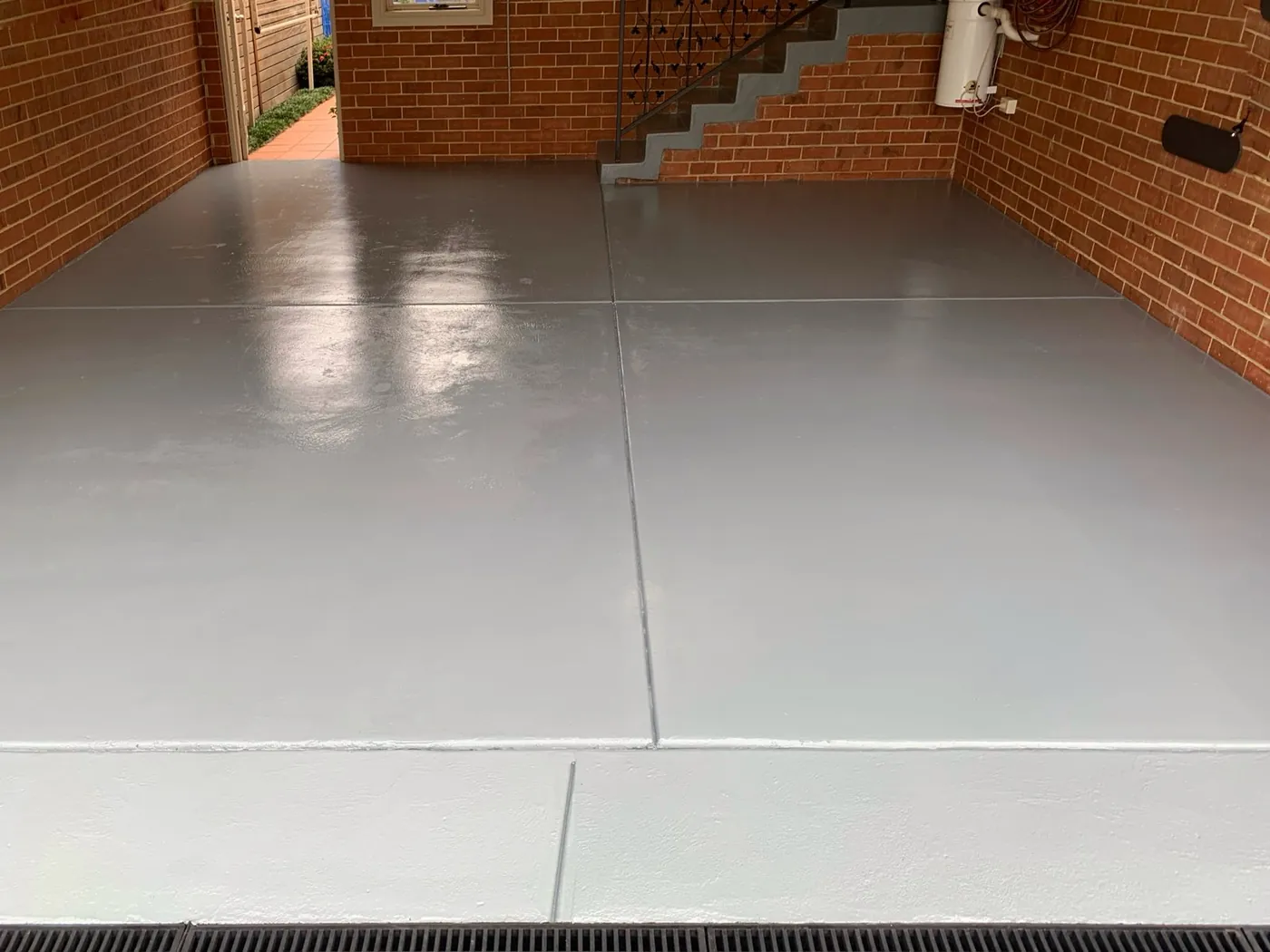
- Concrete floors and hardstandConcrete is washed with acid under high pressure first, then coated with a concrete paint. Without that wash the coating sits on top of the slab instead of biting into it.
- Pressure washing before anythingYears of dust, exhaust and grime come off under high pressure before a brush comes out. On an industrial building this is half the job. More on pressure cleaning →
- Line marking and zonesBay markings, walkways and safety lines repainted with the floor while the coating is fresh and the area is already closed off.
- Shifts that fit productionNights, weekends and shutdown windows. The point of a night shift on an industrial site is that nothing on your side has to stop.
The industrial pockets we cover
Out west that means Truganina, Laverton North, Derrimut and the estates around Altona and Sunshine. In the north it is Campbellfield, Epping and Craigieburn. In the south east it is Dandenong South, Hallam, Keysborough and Braeside. We already travel that far for painting work: our jobs run from Ballarat and Melton in the west out to Ferntree Gully and Donvale in the east.
Every surface takes a different system
Most complaints about a commercial repaint come down to the wrong product on the wrong surface. These are the systems we use and why.
- Render, brick and plasterTwo coats on a repaint. Three where the surface is new: a primer and two finish coats. Everything is sanded and made good before any of it goes on.
- MetalA metal primer and two topcoats. Used on roller doors, garage doors, columns, handrails and steel framing.
- ConcreteAcid wash under high pressure, then concrete paint. Used on garage floors, workshop slabs, hardstand and driveways.
- Exterior timberWashed with a decking cleaner under high pressure, left to dry, machine sanded, then deck paint on floors and decking, or a stain and clear on frames, windows and joinery.
- Ceilings and exposed servicesOpen ceilings with ducts, pipes and trays are sprayed rather than rolled, which is the only way to get an even finish over that much shape in one shift.
- Paint we useDulux. There is a manufacturer warranty behind it, the colour range is one your architect or brand guide already refers to, and it is the name most clients ask for before we suggest anything.
Real sites, photographed before and after
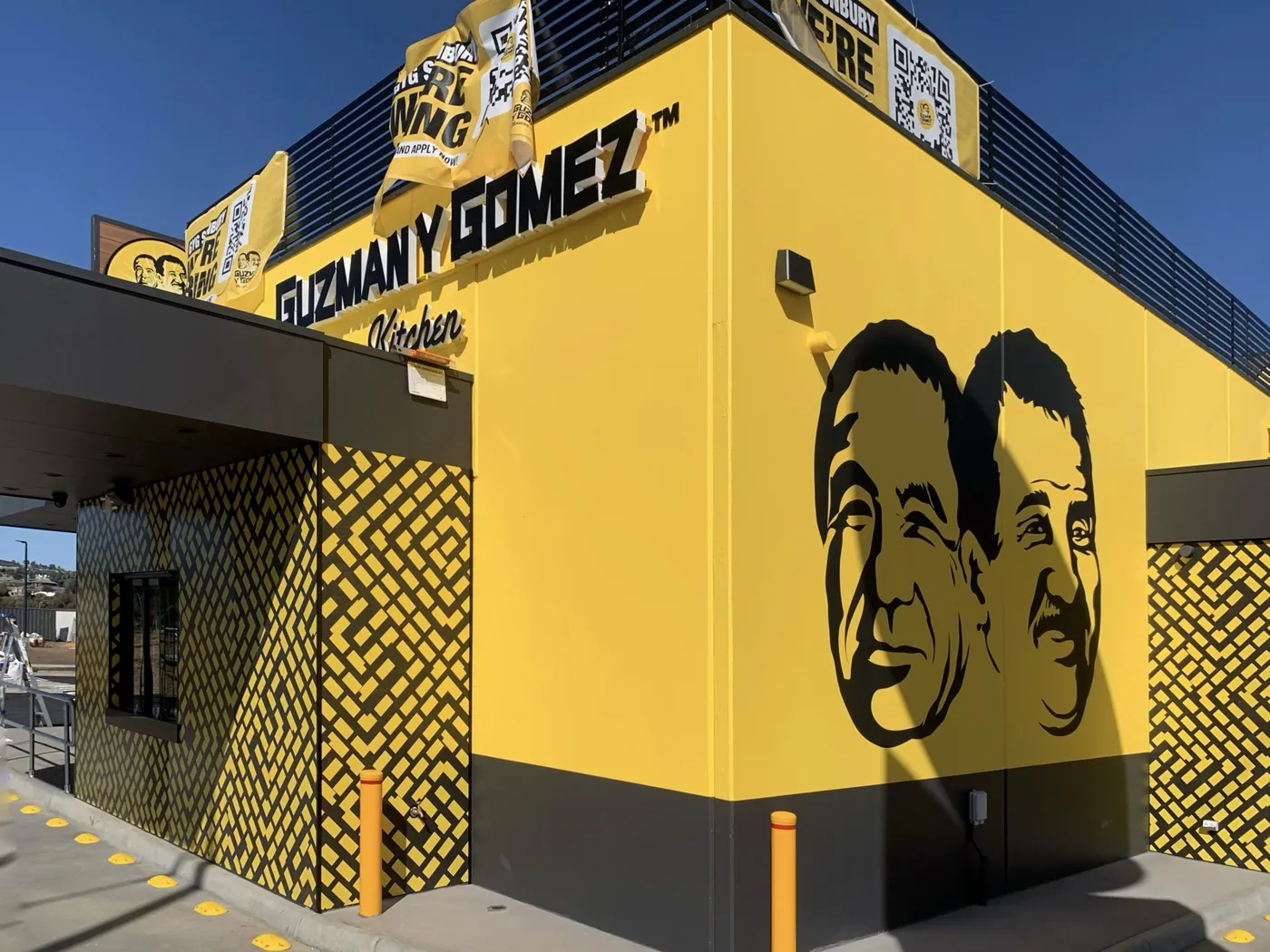
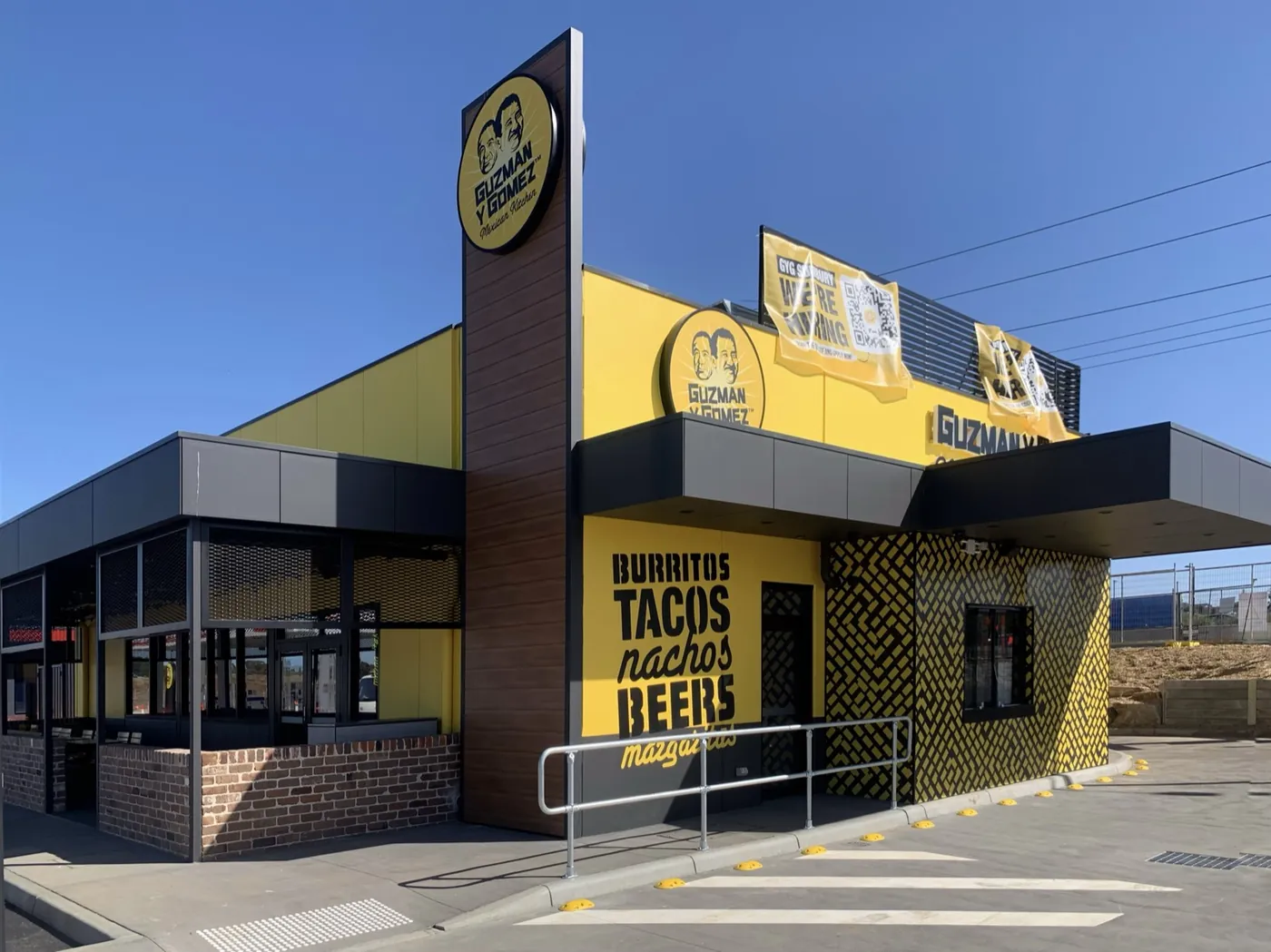
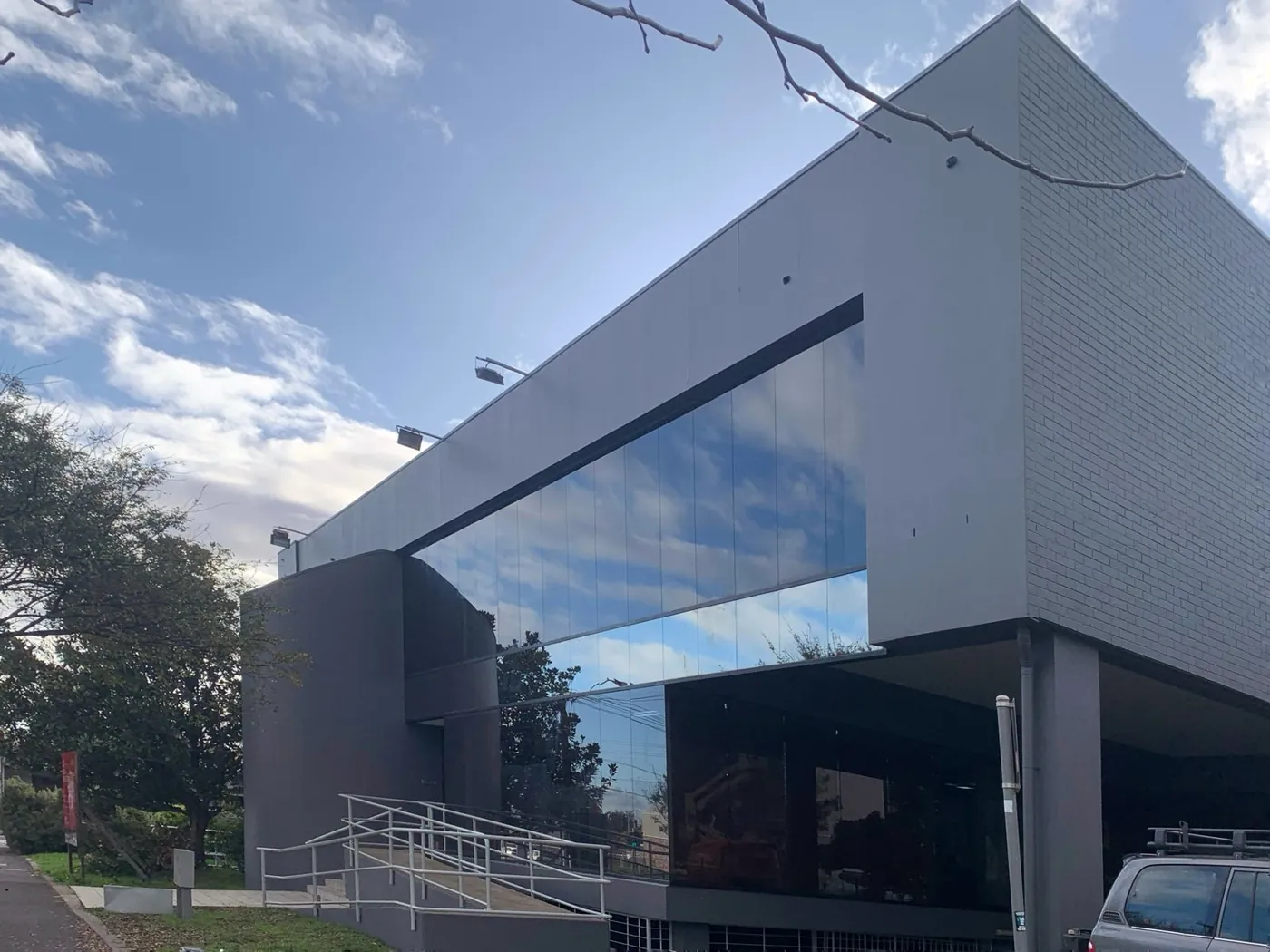
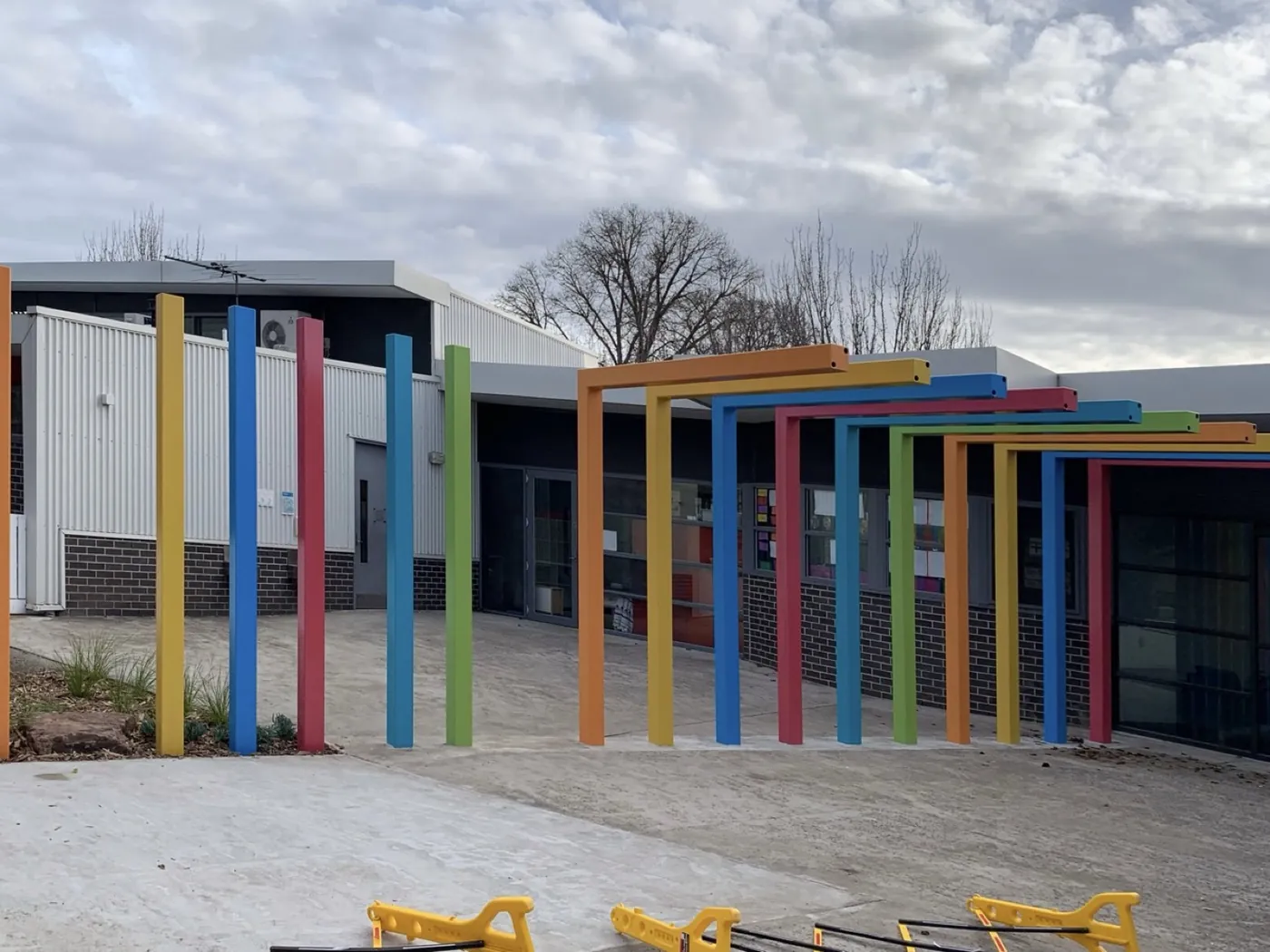
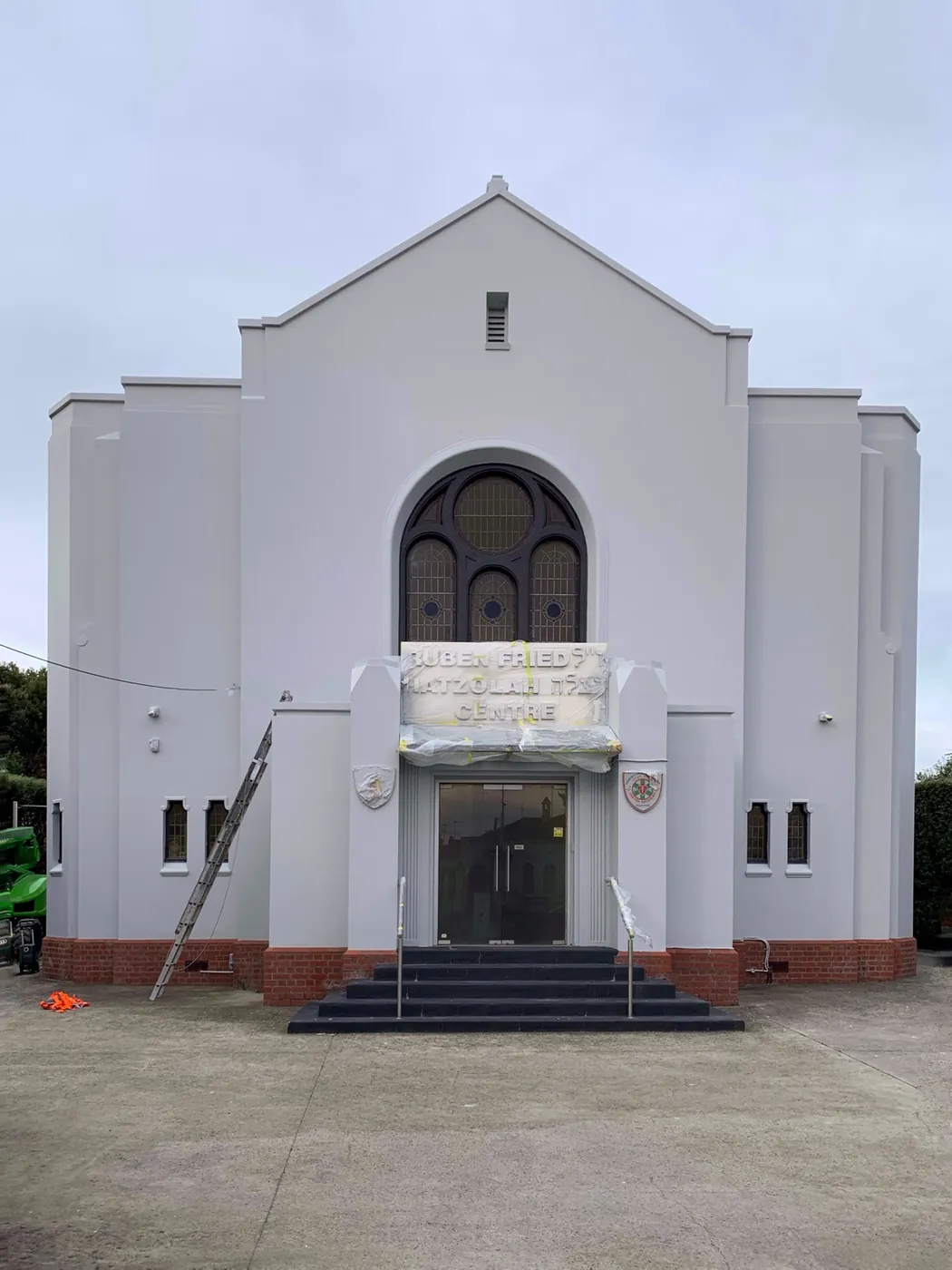
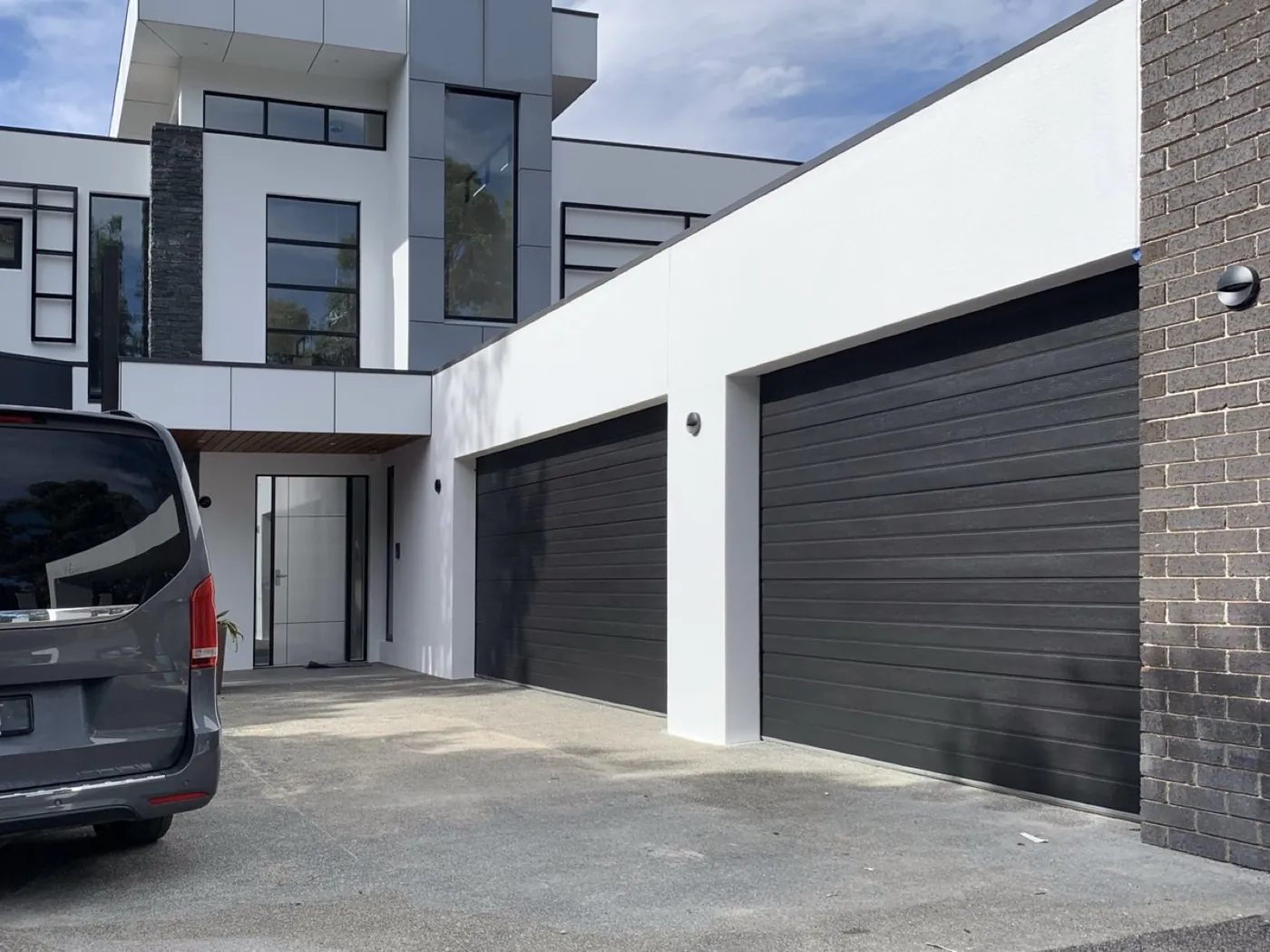
Every job below is ours, shot on the day. Follow any of them through to the full set of photographs in the gallery.
Where these jobs were
The roadside sites are in Sunbury, a Guzman Y Gomez built from scratch and a 7-Eleven service station. The overnight ceiling was a Woolworths bottle shop in Ballarat. The heritage community centre is in Caulfield, the school colonnade in Essendon, and the office building in Footscray. Commercial work takes us well past the metropolitan boundary, which is why a site in Ballarat or out past Melton is a normal week rather than an exception.
How commercial work is priced
One walk through the site, one number, and a start date that fits your calendar rather than ours.
- Fixed price, not an hourly rateYou get a price for the work. A rate that runs while the job does is impossible to budget against and gives nobody a reason to finish.
- Quoted within a day or twoLong enough to measure and count properly, short enough that a tender or a board meeting is not held up waiting on us.
- Variations raised in advanceIf something genuinely unforeseen turns up behind a wall or under a coating, it is discussed and agreed before the work happens.
- Staged so it fits your programOn a builder's site we work to the site manager's schedule. The tiler or the floor layer follows us, and holding them up throws out the whole program, so our part of the calendar is treated as a commitment.
- More people, not a faster passWhen a date has to be met we put more painters on the job. Preparation and drying times stay exactly the same.
After the last shift
What stays with the building once the lift has gone back on the truck.
- Seven year workmanship warrantySeven years on our own work. It does not cover movement or cracking in the building itself, and paint defects sit with the manufacturer. Seven years is not a round marketing number. It is what we are prepared to stand behind on our own work.
- $20,000,000 public liabilityPublic liability insurance with AAMI, twenty million dollars of cover, in force for every day we are on your site.
- Leftover tins and batch numbersThe tins stay with you, labelled with brand, colour code and batch number, receipts if you want them. Facilities teams can touch up a scuffed corridor themselves and have it match.
- Fifteen years of itFifteen years painting across Melbourne, from single rooms to full commercial exteriors. Other painters in the trade have asked Mark to walk a site and judge the standard of the finish, which is a fair test of how a job should look.
Commercial painting questions, asked most often
- Can you paint after hours or overnight?Yes. A bottle shop ceiling in Ballarat was sprayed out between close and open, and the shop traded as normal the next morning. Offices, shops and warehouses are handled the same way.
- Do we have to close while you paint?Usually not. The job is broken into zones so one area is being painted while the rest keeps running. Where that is not practical we move to nights or weekends.
- Are you insured, and can we see the certificate?Public liability insurance with AAMI, twenty million dollars of cover. The certificate goes to your office before work starts rather than after someone asks for it.
- Can you work at height?We are licensed for scissor lift and boom lift. High walls, atriums and warehouse bays are reached from a lift instead of being staged off the floor.
- How is commercial work quoted?We walk the site, take a day or two to price it properly, then give you one fixed number. If something genuinely unforeseen turns up we raise it with you before any extra work happens.
- What warranty comes with the work?Seven years on our own workmanship. It does not cover movement or cracking in the building itself, and paint defects sit with the manufacturer.
Have a site that needs painting?
Send through the address and the hours you can give us. We will walk the site and come back with one fixed price.
Get a free quoteRequest a free quote
Tell us about your project and we'll get back to you, usually within a day, with a fixed, no-surprises quote.
Thank you, your request is on its way
Mark will get back to you within one business day, usually a lot sooner.
Got photos of the space? Send them through on WhatsApp and we can put a price together faster.