
Painters in Brighton
Period homes, render and weatherboard, a few streets back from the bay. We have taken a Brighton house right through, inside and out, over about a month. Salt air is the reason preparation matters more here than almost anywhere else in Melbourne.
Salt air, ornate plaster and heritage streets
- Salt air does the damage hereBrighton sits on Port Phillip Bay, and the wind comes off the water carrying salt. On the exposed elevations, usually the south and west walls, a coat that would last comfortably inland chalks and fades years earlier. That is a preparation problem before it is a paint problem: salt has to come off the surface first, or the new coat is sitting on it.
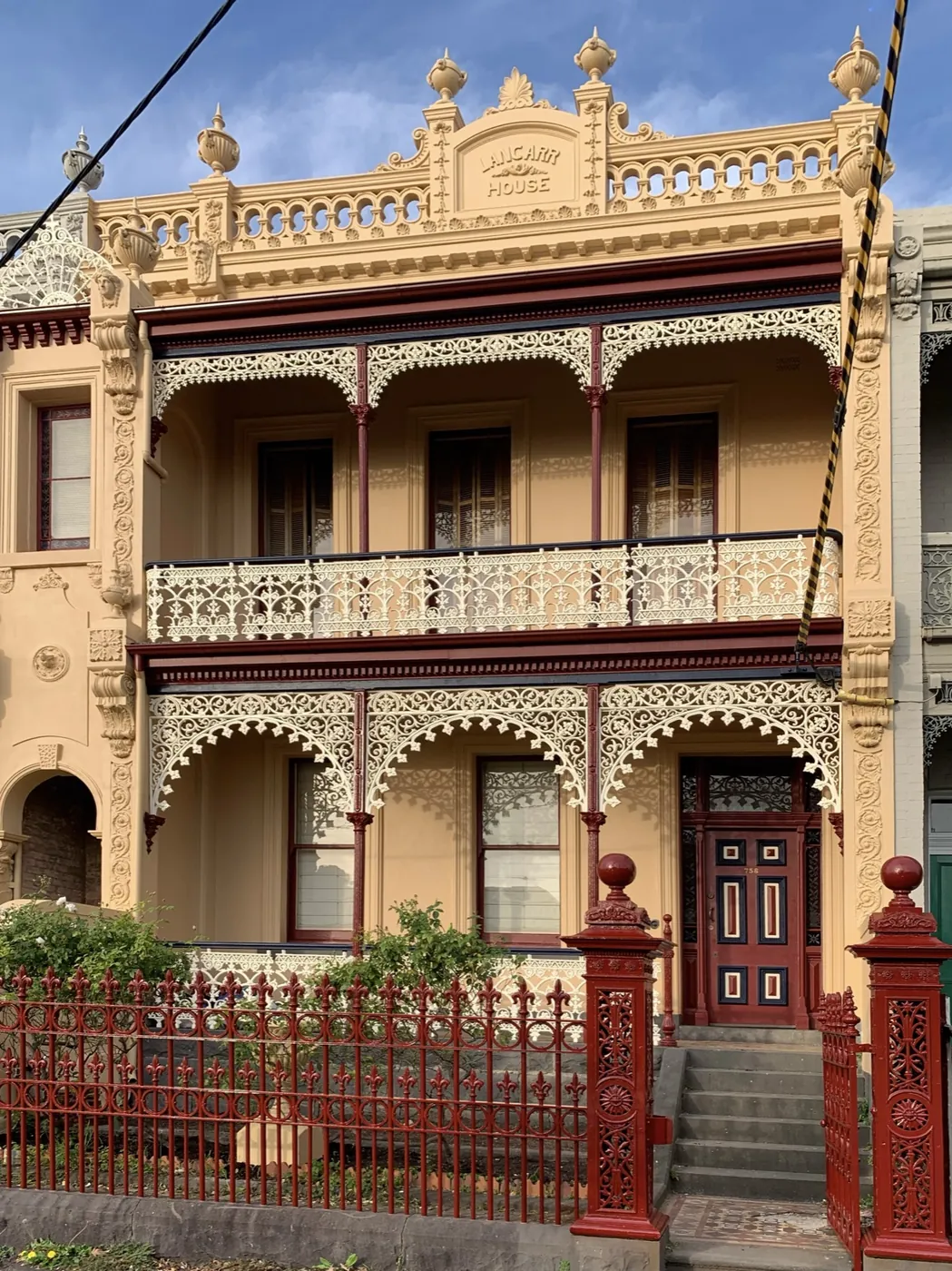
- Ornate plaster, and a lot of itThe older streets are full of Victorian and Edwardian homes with ceiling roses, panelled ceilings, cornices of real depth, picture rails and niches set into the walls. Plaster like that cannot be rolled or sprayed over without losing the detail. Every line of it is brushed by hand. That is slow going, and it is the entire reason the detail still looks crisp when the job is done.
- Render, weatherboard and everything in betweenBrighton is not one kind of house. Rendered facades sit next to weatherboard cottages and modern rebuilds, and each takes its own preparation: render needs its cracks opened up and filled, weatherboard needs sanding, filling and priming before a finish coat goes anywhere near it.
- Heritage streetsSome pockets of Brighton carry a heritage overlay, and what it permits shifts from one street to the next. Before quoting colours we ring the council and ask what covers your particular street, instead of guessing.
When a bayside exterior is due again
The question here is usually not how to paint the house, it is when. Getting the timing right on the elevations that face the water is what keeps the rest of the exterior from being dragged along with them.
- About every five years, sooner on the weather sideAn exterior inland comes round roughly every five years. Facing the bay it comes sooner, because wind and salt work on the coat every day of the year. Running the whole house on one clock is what leaves the exposed walls tired while the sheltered side still looks new.
- What tells you it is dueColour gone flat and chalky when you run a hand down it, hairline cracks opening in the render, fine splits along weatherboard joints, timber frames greying where the coat has worn off. None of it is urgent the day you notice it. Each one is water looking for a way in.
- The weather side on its own is a real optionYou do not have to do the whole exterior in one go. Taking the two elevations that cop the weather now and leaving the sheltered ones for the next round spreads the cost and keeps the house looking even. It only works if the colour can be matched exactly next time.
- Which is why the tin stays with youThe leftover paint is left on site with the brand, colour code and batch number on the lid. Years later that tin is the difference between a patch that disappears and a patch you can pick out from the street.
- Frames and sills run on their own clockTimber joinery near the water needs looking at before the walls do. Caught while the coat is only thin, a frame is a sand and a recoat. Left until bare timber has greyed and split, it becomes a repair first and a paint job second.
Two jobs in Brighton, inside and out
Both of these came off the same job: a large Brighton home taken through inside and out. It ran about a month and Mark put a team together for it, working room by room through the interior and then out to the exterior timber.
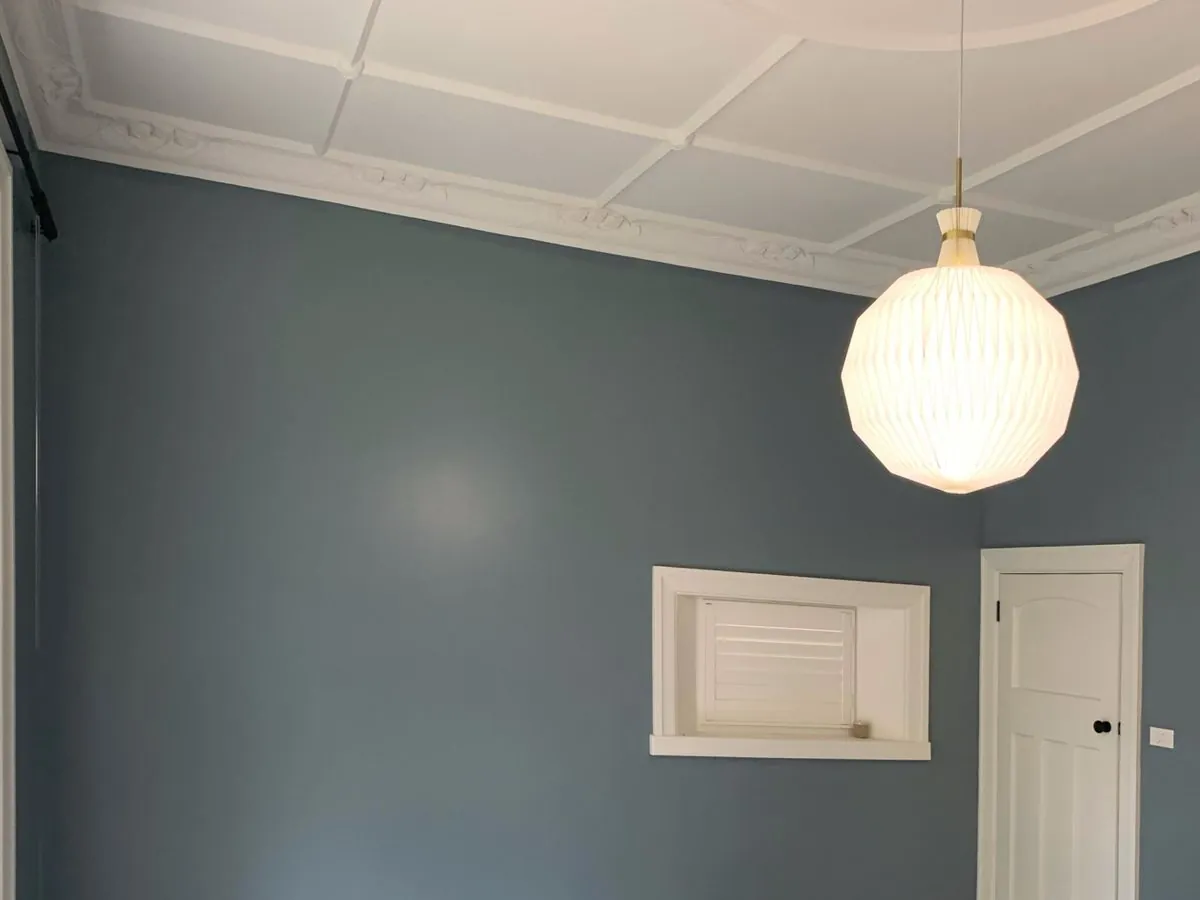
A Brighton period home, every bit of plasterwork left white
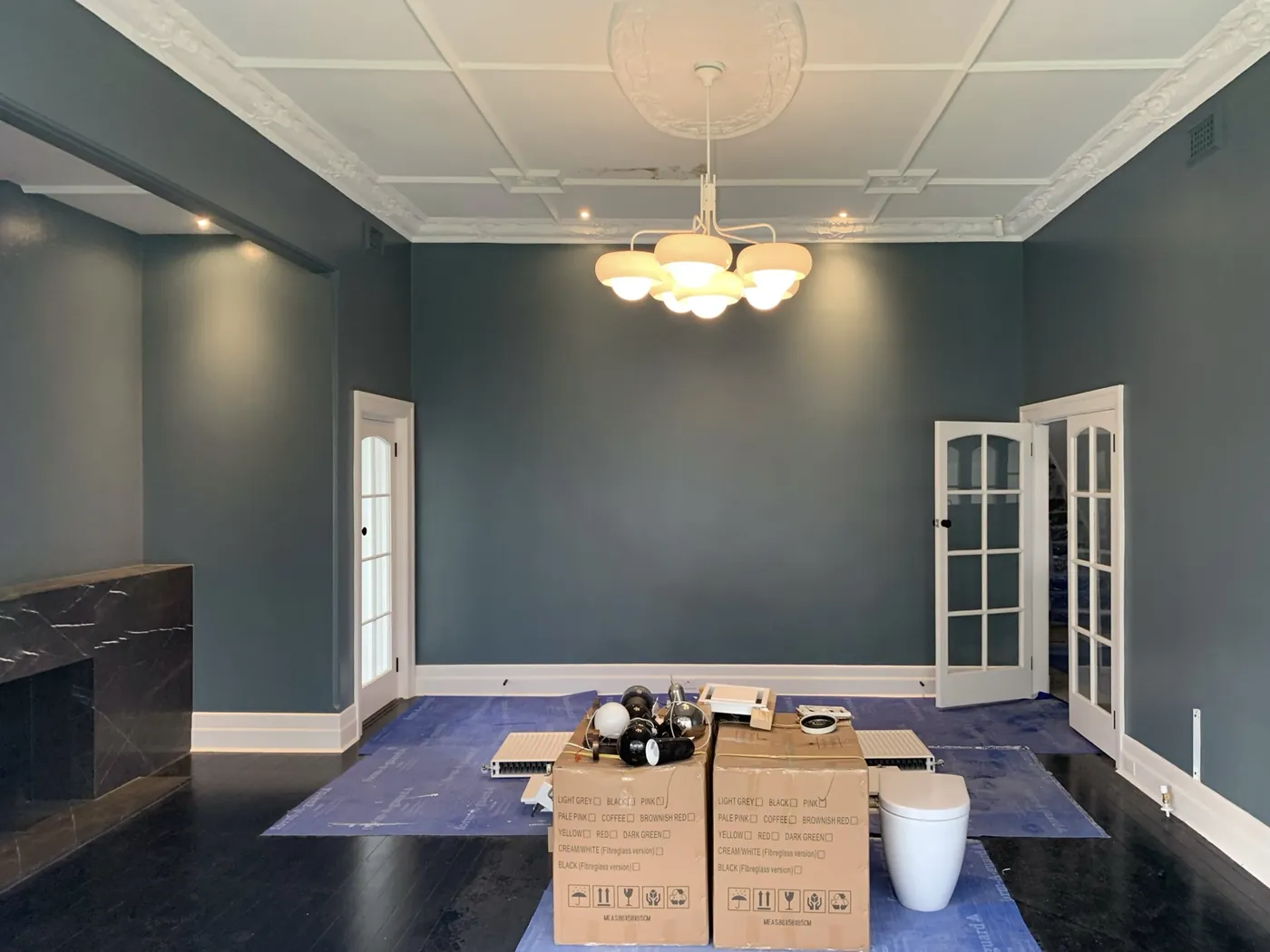
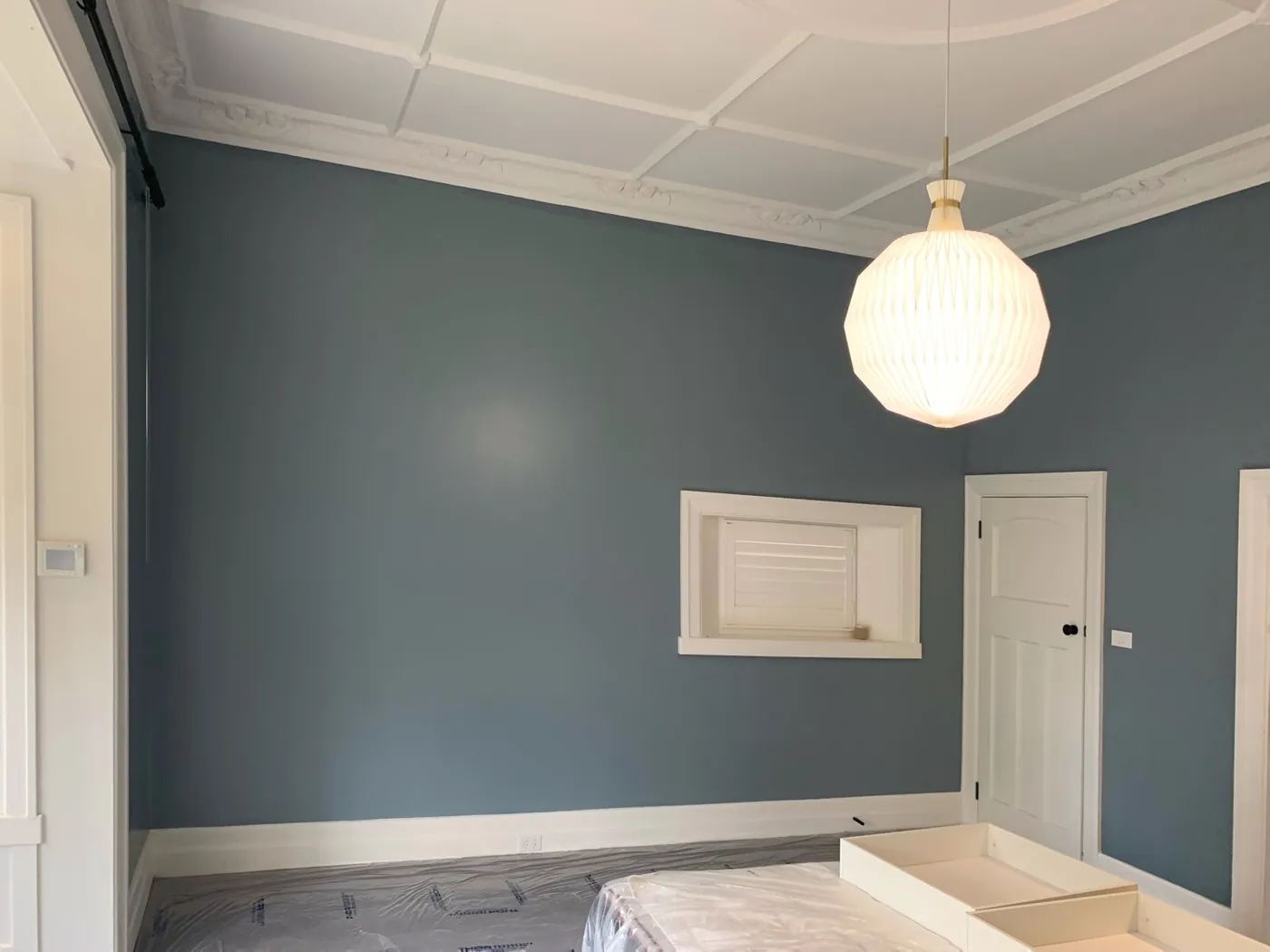
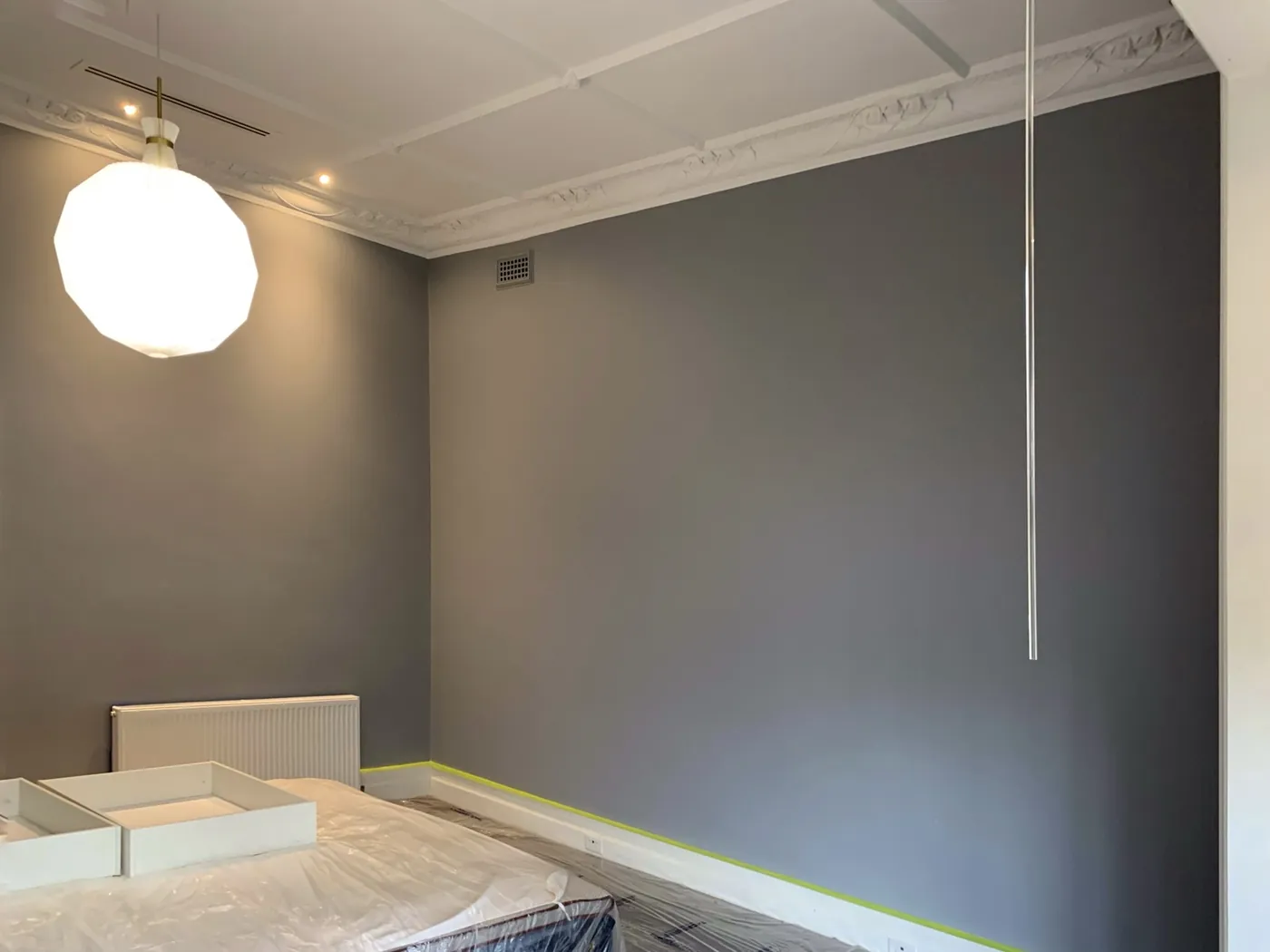
Wall colour dropped to a dark blue grey while every piece of plasterwork stayed white: the panelled ceilings, the cornices, the rose, the French doors, the niches and the skirtings. Choosing the shade defeated the owner entirely, so Mark was asked to make the call, and the result went down very well. A feature wall went in behind the television. Before a single tin came off the truck the floors were sheeted and the skirtings masked.
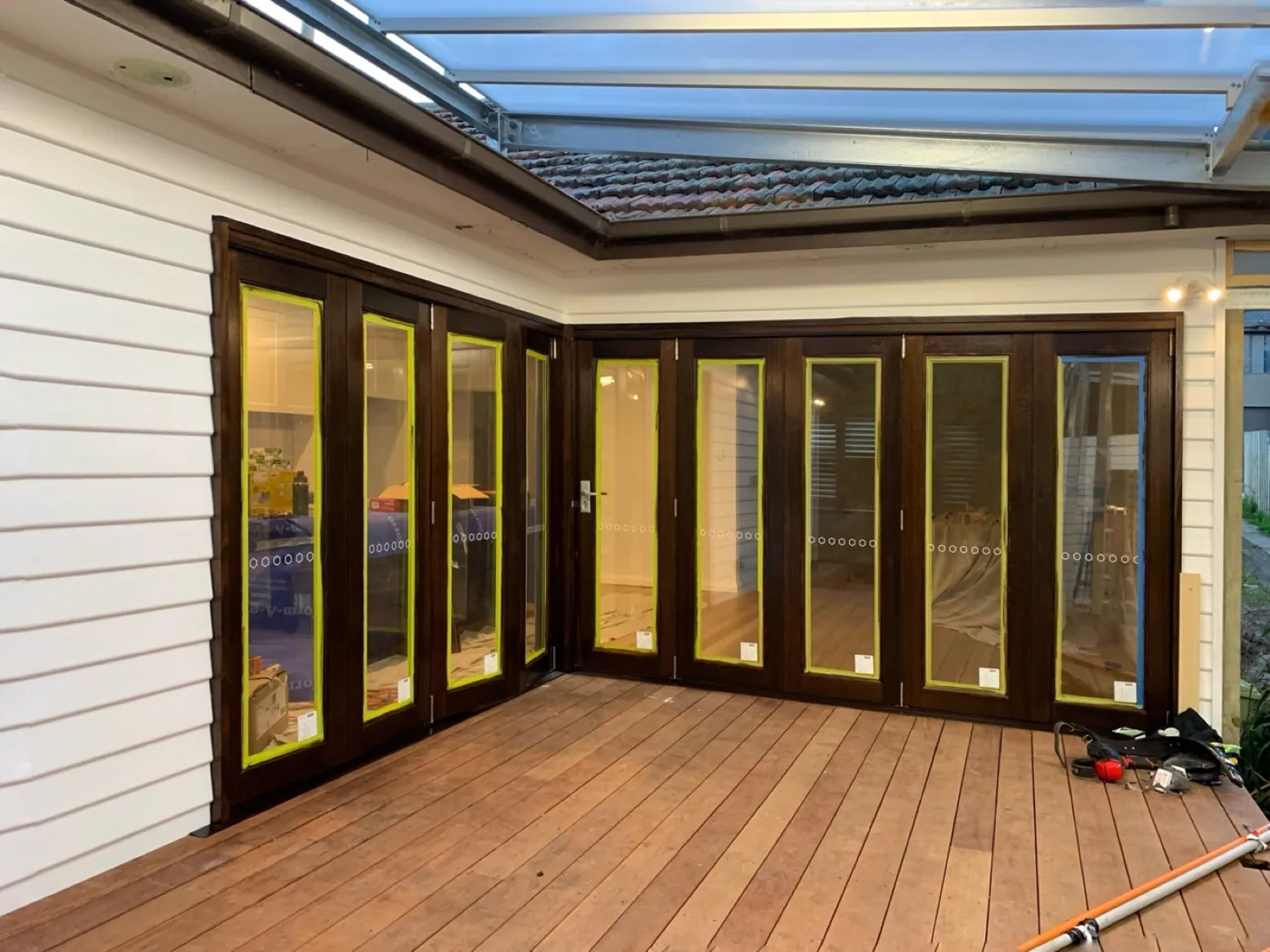
Cedar bifolds, restained and sealed
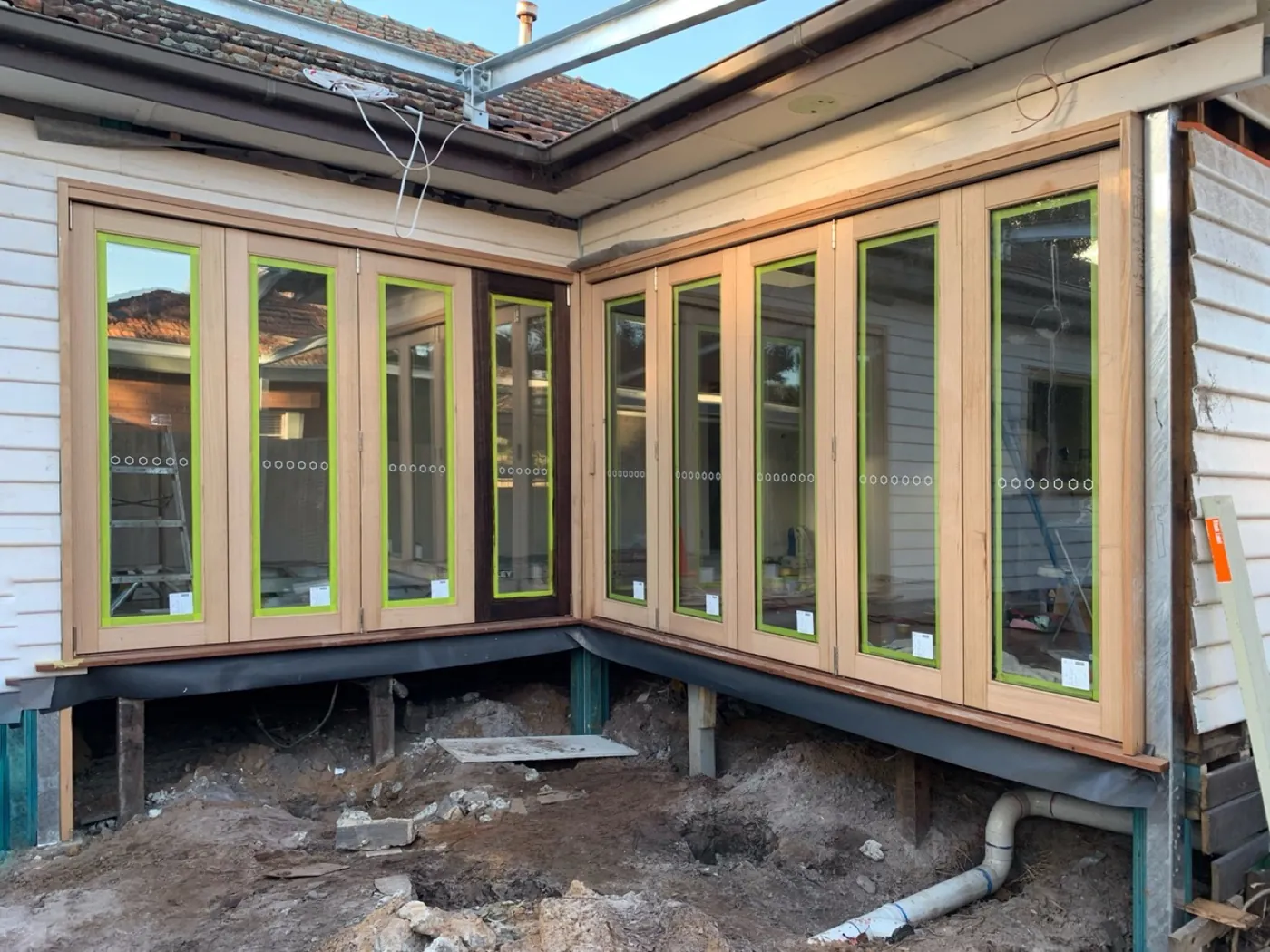
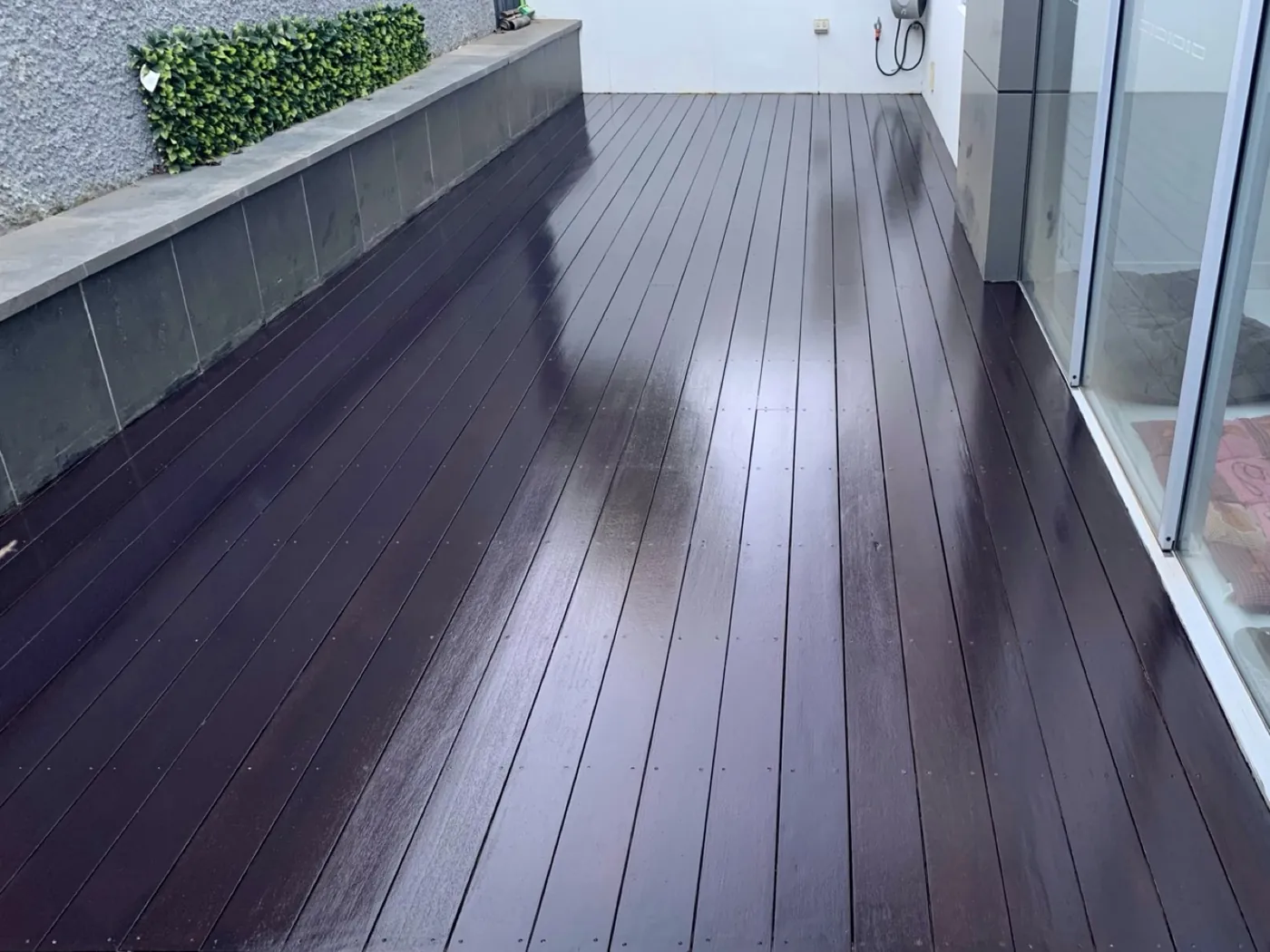
The exterior hardwood from the same Brighton job. The cedar bifolds took a stain with a clear coat over the top, exactly what went onto the windows. The decking on the same property was taken in deck paint rather than stain, because a surface that is walked on wears differently from one that is not.
Painting services in Brighton
The same range we bring to any Melbourne home, whether the job is one room or the whole house inside and out. In Brighton it is usually the exterior and the outdoor timber that need attention first, because salt air off the bay wears a finish faster than anywhere inland.
Whose job is it
A homeowner, a builder, a business owner and someone with a period house worry about completely different things. Pick the one that fits and you will get the answers written for you.
Homeowners
- You stay in the house while we work
- Covers down before anything starts
- One fixed price, not an hourly rate
Builders
- We hold the date we gave you
- Sequenced around the trades behind us
- Priced in a day or two
Commercial
- Staged or overnight, you keep trading
- Access and hours agreed up front
- Shops, offices, schools, warehouses
Heritage
- Ornate plaster cut in by hand
- Old surfaces sanded, not covered
- Council checked before colour
Painting a home in Brighton?
Tell us the address and what you are planning. We will come and look, then give you one fixed price.
Get a free quoteRequest a free quote
Tell us about your project and we'll get back to you, usually within a day, with a fixed, no-surprises quote.
Thank you, your request is on its way
Mark will get back to you within one business day, usually a lot sooner.
Got photos of the space? Send them through on WhatsApp and we can put a price together faster.